
GMADA & Infrastructure News
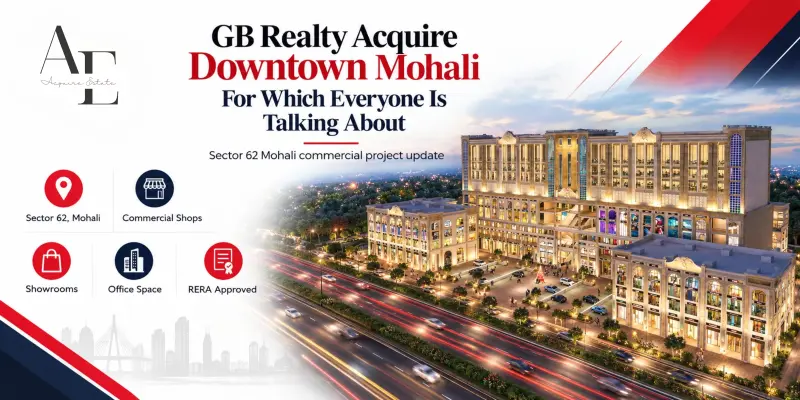
GB Realty Acquire Downtown Mohali For Which Everyone Is Talking About
GB Realty has officially taken over the Downtown Mohali commercial project in Sector 62, bringing RERA-approved shops, s...
Confused about RERA vs PUDA vs GMADA and which one actually protects your money? This guide traces how each authority originated, what…Confused about RERA vs PUDA vs GMADA and which one actually protects your money? This guide traces how each authority originated, what powers it holds and how it shields Punjab homebuyers from fraud, delays and illegal colonies before you sign anything.






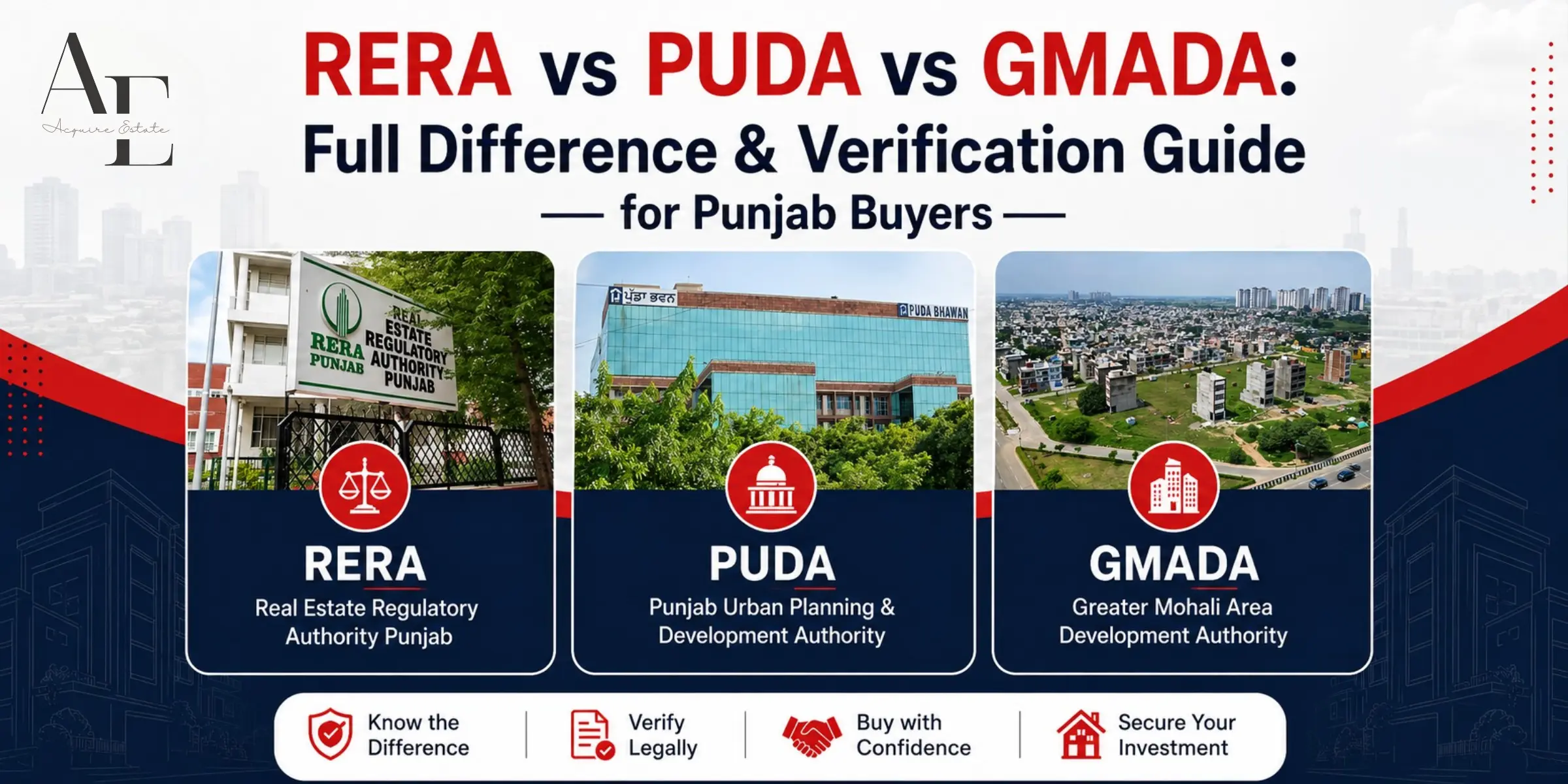
Every second family in Mohali, Zirakpur or Kharar has asked the same nervous question at some point. Is this plot legal? Is this builder allowed to sell here? And more often than not, the confusion begins with three letters that sound similar but mean very different things: RERA, PUDA and GMADA.
If you are trying to understand RERA vs PUDA vs GMADA before signing a cheque, you are already doing something most buyers skip and that single decision can save you years of court visits and sleepless nights.
This blog breaks down the difference between RERA, PUDA and GMADA in simple words, let me tell you exactly how each body was born, what it actually does on the ground and how it stands between you and a fraud that could wipe out your life savings.
Picture this. A young couple from Chandigarh finally saves enough for a down payment for the plot. They find a plot in Kharar being sold at a price that feels too good to refuse.
The broker throws around terms like PUDA approved and GMADA sector as if they mean the same thing and the buyers, eager and a little scared of losing the deal, do not ask enough questions.
Six months later, they discover the colony has no valid layout approval and their money is stuck in a legal tangle that drags on for years.
This is not a rare story. It happens across Punjab every single month because most buyers never learn who does what.
RERA, PUDA and GMADA are not competing bodies and they are not the same thing either. They sit at different levels of the same system and understanding each one is the closest thing to an insurance policy you can buy before you even own the property.
Long before Mohali became the glittering Tricity suburb it is today, Punjab's urban areas were expanding without much coordination. Small colonies came up on farmland, roads were narrow and unplanned and there was no single authority watching over how towns grew.
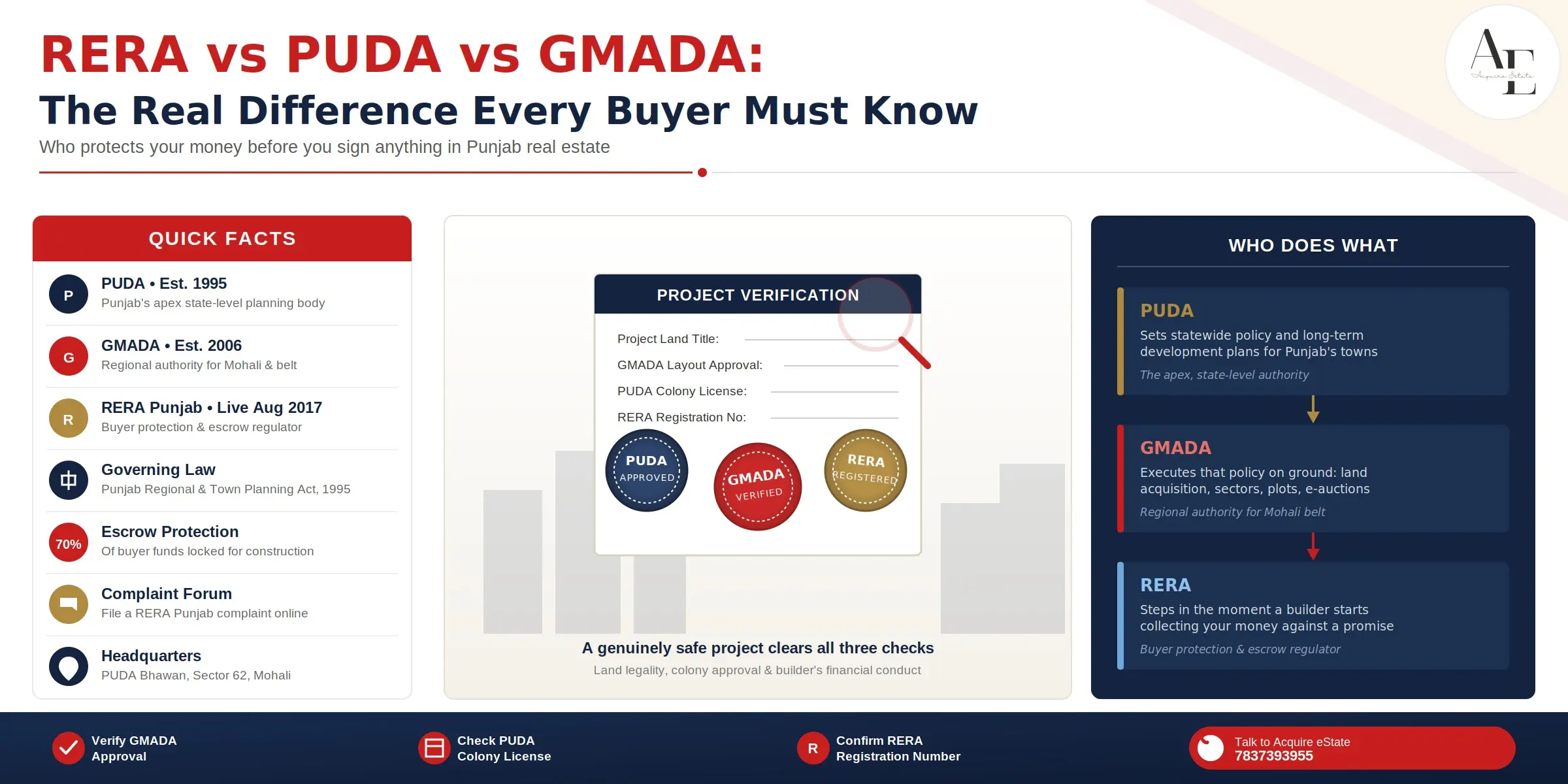
To fix this, the Punjab government passed the Punjab Regional and Town Planning and Development Act in 1995 and under this law, the Punjab Urban Planning and Development Authority, known to everyone simply as PUDA, was formally set up on the first of July 1995.
Think of PUDA as the parent institution, the umbrella body that oversees planned urban growth across the entire state of Punjab. It does not just build one city or one sector.
It sets the vision, prepares long term development plans and later created regional authorities under its wing to handle specific cities, GMADA being the most well known example for the Mohali region.
Detail | Information |
Full form | Punjab Urban Planning and Development Authority |
Established | 1 July 1995 |
Governing law | Punjab Regional and Town Planning and Development Act, 1995 |
Headquarters | PUDA Bhawan, Sector 62, Mohali |
Role | Apex, state level body that guides all regional development authorities |
Chairman | Chief Secretary, Punjab (revised by cabinet decision in June 2024) |
So is PUDA and GMADA the same? No and this is where most buyers get it wrong. PUDA works like the head office, while GMADA is one of its regional branches, created specifically to handle Mohali and the surrounding belt.
There are other regional development authorities functioning the same way in other cities, all reporting back to PUDA's broader planning framework.
By the early 2000s, Mohali was no longer a small town in Chandigarh's shadow. IT companies were arriving, families were relocating from across Punjab and Himachal and the pressure on land and infrastructure was rising fast.
PUDA alone could not micromanage a region growing this quickly, so the Punjab government carved out a dedicated authority just for this belt.
The Greater Mohali Area Development Authority, better known as GMADA, was constituted through an official notification dated 14 August 2006, under Section 29(1) of the same 1995 Act that created PUDA.
Its job was narrow and specific compared to PUDA's statewide role: plan, develop and regulate land use across Mohali and the towns growing around it.
Detail | Information |
Full form | Greater Mohali Area Development Authority |
Established | 14 August 2006 |
Governing law | Punjab Regional and Town Planning and Development Act, 1995, Section 29(1) |
Jurisdiction | Mohali (SAS Nagar), Zirakpur, Kharar, Derabassi, Banur, Mullanpur, Fatehgarh Sahib, Mandi Gobindgarh, Roopnagar |
Core functions | Land acquisition, master planning, plot schemes, e-auctions, infrastructure, building plan approvals |
Notable projects | Aerocity, Eco City, Medicity, Education City, IT City Sector 101 |
GMADA does not build like a private developer selling flats. It works at the land level. It acquires large tracts, prepares sector layouts, lays down roads, sewage and water lines and then either develops the land itself or releases it to the public through structured plot schemes and e-auctions.
Once you understand this, the phrase GMADA plot scheme starts to make a lot more sense, because you are buying land that has passed through a government planning process rather than an informal deal struck in a village. Buyers evaluating approved developments in New Chandigarh can also read our complete DLF Mullanpur price, floor plan and possession guide.
For decades, town planning bodies like PUDA and GMADA controlled land use, but nobody was directly protecting the buyer's money once a builder started collecting payments for an under construction flat.
Builders delayed handovers for years, changed floor plans without consent and buyers had almost no fast legal remedy. This gap is exactly why Parliament passed the Real Estate Regulation and Development Act in 2016, applicable across India from May 2017.
Punjab moved to implement it soon after and Punjab RERA became operational in August 2017. Unlike PUDA and GMADA, which are essentially planning and land development authorities, RERA is a consumer protection and regulatory body. It does not decide where a colony can be built. It decides whether the builder selling you that flat or plot is playing fair.
Makes it mandatory for builders to register projects above 500 square metres or eight units before advertising or selling
Forces builders to disclose the real RERA registration number, project timeline, land title and layout approvals on the public portal
Requires 70 percent of buyer payments to be kept in a separate escrow account, used only for that specific project's construction
Gives buyers a formal forum to file a RERA Punjab complaint against delays, false promises or poor construction quality
Can penalise builders financially and even revoke project registration for repeated violations
This is the single biggest reason every serious buyer should run a Punjab RERA registration check before paying even a token amount, because a missing or fake RERA number is often the first red flag of a project that will cause trouble later.
Here is the difference between RERA Punjab vs GMADA and PUDA laid out side by side, because once you see it in one place, the confusion usually disappears for good.
Parameter | PUDA | GMADA | RERA |
Full form | Punjab Urban Planning and Development Authority | Greater Mohali Area Development Authority | Real Estate Regulatory Authority |
Established | 1995 | 2006 | 2017 (Punjab) |
Level | State, apex body | Regional, city level | State regulatory authority |
Main job | Statewide urban planning policy | Land development in Mohali region | Protecting buyers of registered projects |
Deals with | Master plans, oversight of regional authorities | Sectors, plots, e-auctions, building approvals | Builder registration, escrow, complaints |
Who approaches it | Rarely approached directly by individual buyers | Buyers of GMADA plots, colonisers, builders | Homebuyers with builder disputes |
In short, PUDA sets the vision for Punjab's towns, GMADA executes that vision on the ground in the Mohali region and RERA steps in the moment a builder starts collecting your money against a promise. None of the three replaces the other and a genuinely safe project usually clears all three checks.
A typical GMADA sector project moves through a chain that most buyers never see. GMADA first acquires and plans the land under the broader policy framework set by PUDA.
It then either releases plots through a GMADA plot scheme and public e-auction or hands over developed land to a private builder who constructs flats or villas on it.
Before construction can legally begin, the builder needs building plan approval GMADA, confirming the design matches sanctioned norms. Once construction is fully complete and services like water and sewage are functional, the builder applies for an Occupation Certificate GMADA, which is the official green light saying the building is fit to live in.
If the project is a private builder's residential or commercial launch above the size threshold, it must also carry a valid RERA registration before a single flat is booked.
So when you are told a project is GMADA approved and RERA registered, it genuinely means two different regulators have signed off on two different aspects: GMADA on the land and construction legality, RERA on the financial conduct of the builder.
On paper, PUDA, GMADA (or private developers), and RERA Punjab form a clean protective chain: PUDA zones and approves plans, GMADA develops and sells, while RERA registers projects, holds escrow, and enforces promises; giving buyers strong legal recourse when followed.
Verification is not complicated once you know where to look and skipping this step is where most buyers lose money.
Visit the official GMADA website and check the e-auction and allotment records for the specific sector
Ask for the allotment letter number and cross check it against GMADA's public notices
Confirm whether the Occupation Certificate has been issued if you are buying a ready built unit
Check whether the colony appears in PUDA's list of licensed or approved colonies, available through its official portal
Unauthorised colonies often get regularised later, but buying into one before regularisation is a real financial risk
Ask the seller for the original layout plan sanction letter, not just a verbal assurance
Zirakpur has seen explosive real estate growth in the last few years and unfortunately that growth has attracted its share of dubious launches. Before booking anything in Zirakpur, Mohali, Kharar or Panchkula, run a Punjab RERA registration check using the project name or the builder's name on the official Punjab RERA portal.Buyers comparing registered residential developments can also explore our guide to 3 BHK flats in Mohali with RERA, price and location details .
Search the project by name and confirm the RERA registration number matches what the builder has shared with you
Check the promised completion date listed on the portal against what the sales team is telling you verbally
Look at the complaint history section, since past disputes filed by other buyers are public information
Verify that the project's land title and approvals uploaded on the portal are current, not outdated documents
If a builder resists sharing the RERA number or gives you a number that does not match on search, treat that as a serious warning sign, not a small formality.
Mohali is not the only city with its own regional authority. PUDA works as the umbrella body over several regional development authorities set up across Punjab between 2006 and 2007, each responsible for planned growth in its own city.
Authority | City Covered |
GMADA | Mohali, Zirakpur, Kharar, Derabassi and the wider Tricity belt |
GLADA | Greater Ludhiana Area Development Authority |
ADA | Amritsar Development Authority |
JDA | Jalandhar Development Authority |
PDA | Patiala Development Authority |
BDA | Bathinda Development Authority |
Which authority handles Mohali real estate approvals is a question we hear often and the answer is GMADA for land and construction matters, with PUDA providing the overarching policy umbrella above it.
For the older legal framework governing land ownership and tenancy that all of this sits on top of, see our Punjab Land Reforms Act 1972 guide.
This is one of the most common doubts buyers carry and the honest answer is that it depends on what you are buying. A direct allotment or e-auction plot purchased straight from GMADA is a government land transaction and RERA registration requirements are generally built around private real estate projects rather than government land allotments of this nature.
However, the moment a private builder takes GMADA developed land and constructs a residential project of a qualifying size on it, that specific project needs its own RERA registration before booking begins. So is RERA required for GMADA plots bought directly from the authority?
Usually not in the same way. Is RERA required for a builder's residential launch on GMADA land? In most qualifying cases, yes. Always ask directly and verify rather than assuming either way.
If a builder has missed deadlines, changed specifications without consent or simply gone silent after taking your money, RERA gives you a real path forward instead of years in a civil court.
Create a login on the Punjab RERA portal as a complainant and verify your account through the confirmation email
Complete your profile details under the My Profile section before filing anything
Select the correct complaint form and fill in project details, builder details and the nature of your grievance
Pay the prescribed complaint registration fee online through the portal
Upload supporting documents, including your booking agreement, payment receipts and any written communication with the builder
Track your case status and hearing dates through the cause list published regularly on the portal
This process is transparent by design and every stage of your complaint remains visible to you online, unlike traditional litigation where updates can take months to reach you.
Once you have verified the legal side, our step-by-step guide to buying a flat in Mohali walks you through the rest of the process.
Buying a home is rarely just a financial transaction. It is the place where your children will grow up, where festivals will be celebrated and where years of hard work finally turn into four walls you can call your own.
That is precisely why the debate around RERA vs PUDA vs GMADA deserves five careful minutes of your attention rather than being brushed aside as legal jargon. When you understand RERA vs PUDA vs GMADA clearly, you stop depending entirely on a broker's word and start making decisions backed by verifiable government records.
Remember the simple version. PUDA lays down the policy for Punjab's urban growth, GMADA turns that policy into real sectors and plots across the Mohali region and RERA stands guard over your money once a builder starts collecting it.
Comparing RERA vs PUDA vs GMADA before you sign any agreement is not extra homework, it is basic self protection in a market where trust has to be earned through documents, not promises.
No. PUDA is the statewide apex body established in 1995, while GMADA is a regional authority created in 2006 specifically for the Mohali region, functioning under PUDA's broader planning framework.
A GMADA plot is land released by the regional authority responsible for the Mohali belt, while colonies developed under other PUDA linked regional authorities in cities like Patiala or Jalandhar are commonly referred to as PUDA plots by local convention, even though the same 1995 Act governs both.
GMADA handles land development, plot allotment and building plan approvals in Mohali, Zirakpur, Kharar and the surrounding belt, operating within the wider policy structure set by PUDA.
Direct government allotments through GMADA typically fall outside the scope built for private project registration under RERA, but any private builder constructing on that land for sale generally must register separately with RERA.
GMADA was constituted under the same Punjab Regional and Town Planning and Development Act, 1995 that created PUDA and it operates as a regional authority within PUDA's overarching state level planning structure.
Visit the official Punjab RERA portal, search the project or builder name and compare the registration number and project details displayed against what the seller has shared with you.
It means confirming that a plot or project genuinely carries a valid GMADA allotment, approved layout and, where applicable, an Occupation Certificate, rather than relying on a broker's verbal claim.
Approval status can change and older approvals should still be cross verified on PUDA's current records, since layout amendments or disputes can arise even in previously approved colonies.
You risk booking into an unregistered project with no escrow protection, no guaranteed timeline enforcement and no easy legal recourse if the builder defaults.
GB Realty has officially taken over the Downtown Mohali commercial project in Sector 62, bringing RERA-approved shops, s...
Ecocity GMADA is New Chandigarh's flagship plotted township, developed by the Greater Mohali Area Development Authority....
A quiet notification has turned into one of Mohali's loudest land disputes this year. Across 78 villages near Kurali, fa...