

Government Real Estate Laws
Builder Delayed Possession? RERA Rights and How to Claim Them
Builder delayed your flat? Learn Section 18 of RERA, how to file a complaint in Punjab, Haryana and Delhi, and when to c...
Buying a resale GMADA/PUDA plot or house in Mohali? Learn the GMADA transfer fee, NOC steps, documents buyers often miss, and common…Buying a resale GMADA/PUDA plot or house in Mohali? Learn the GMADA transfer fee, NOC steps, documents buyers often miss, and common mistakes to avoid, so you can pay the seller with full confidence.






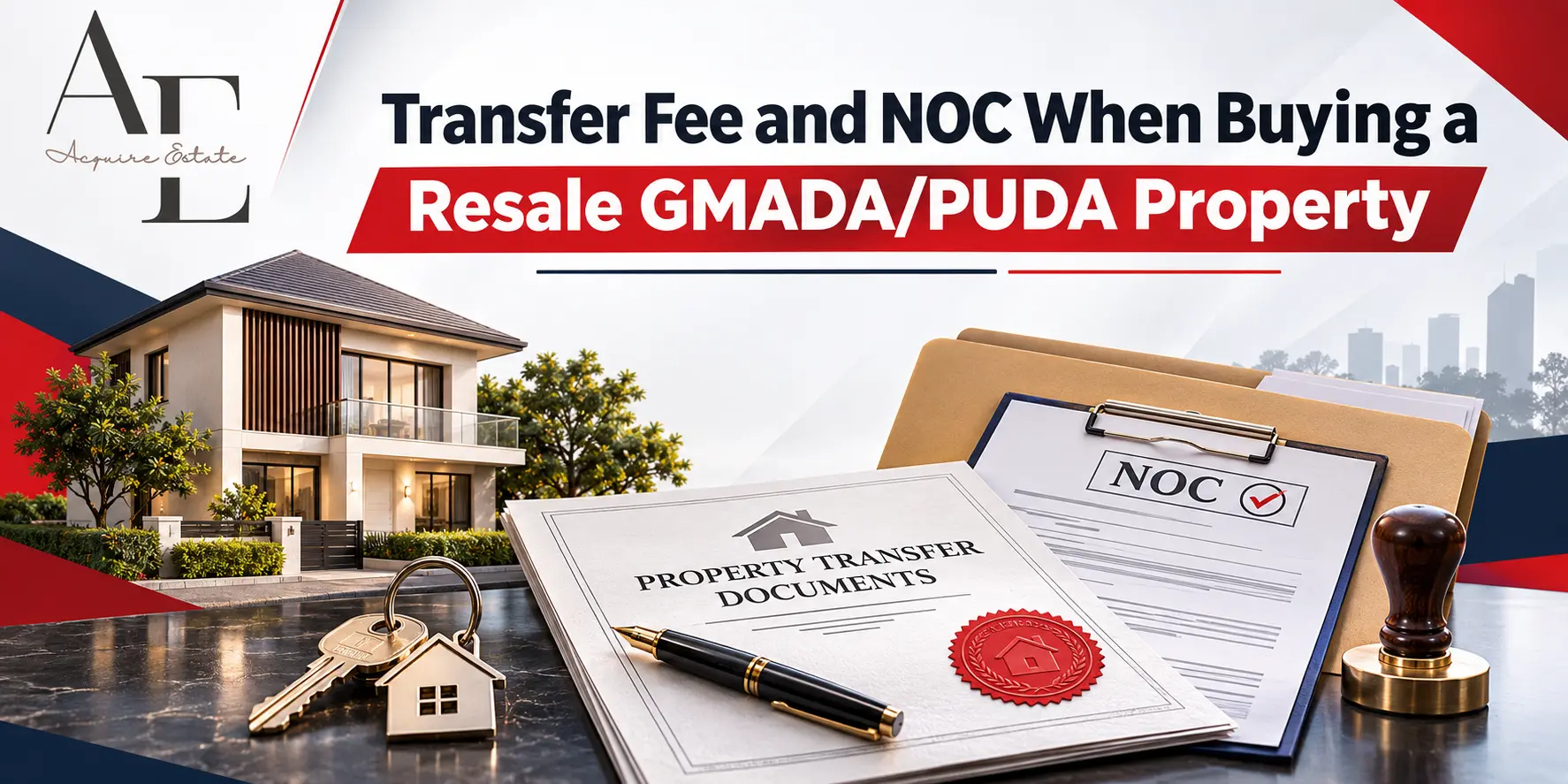
You found a good resale plot or house in Mohali. The price looks fair and the seller says the papers are clear. Stop before you pay. In a GMADA or PUDA property, paying the seller is only one part of the deal. GMADA must also give its permission (the NOC) and after registration, it must update the owner’s name in its own records.
These plots and houses are allotted by the authority, and the authority keeps its own record of who the owner is. So GMADA must give its permission (the NOC) and after registration, it must update the owner’s name in its own records. If either step is missed, the deal stays incomplete, even if you have paid in full.
Many buyers learn this too late and face delays, extra fees, a file stuck on an objection or a property still in the seller’s name. This can cause real trouble later, when you want to sell, take a home loan or apply for water and sewerage connections. A small paperwork gap today can cost you weeks of follow-up or even lakhs of rupees in unexpected dues.
GMADA (Greater Mohali Area Development Authority) and PUDA (Punjab Urban Planning and Development Authority) allot plots, houses and sites in their sectors. When you buy such a property from the first owner, the authority treats it as a transfer of ownership.
A full transfer has three parts:
Permission:The seller applies to GMADA for permission to sell. This permission is the NOC.
Registration:The sale deed is signed and registered at the Sub-Registrar office. Stamp duty and registration charges are paid here.
Re-transfer:You apply to GMADA to update its records with your name.
Many people think the second part is the end. It is not. If you skip the third part, the property can stay in the old owner's name in GMADA's files. This can cause trouble later when you want to sell, take a loan or get water and sewerage connections.
A quick note on property stage.The steps depend on what the seller holds. Some sellers have only an allotment letter or Letter of Intent (LOI). Others have a full conveyance deed. GMADA runs a separate service for LOI transfers. So always ask the seller which papers they hold before you plan anything.
Not sure which authority handles what? See our guide on the difference between RERA, PUDA and GMADA
NOC stands for No Objection Certificate. In GMADA's own forms, it is called Permission for Sale, Gift or Transfer. It is a written approval from the authority saying it has no objection to the seller transferring the property to you.
The NOC is not the same as other GMADA papers. Buyers often mix them up:
No-Due Certificate:Confirms that the owner has paid all GMADA dues.
NOC (permission to transfer):The authority's consent to the sale.
Conveyance Deed:The document that gives title from GMADA to the allottee.
Registered Sale Deed:The paper that records your purchase at the Sub-Registrar.
Change of ownership (re-transfer):The step that updates GMADA's records.
No single paper from this list guarantees a risk-free title. You need the right ones, in the right order.
Who applies for the NOC?The seller applies, because the seller is the recorded owner. But as the buyer, you must supply your own papers, such as your ID proof and an affidavit. So you should stay involved from day one.
Here is the process in simple order.
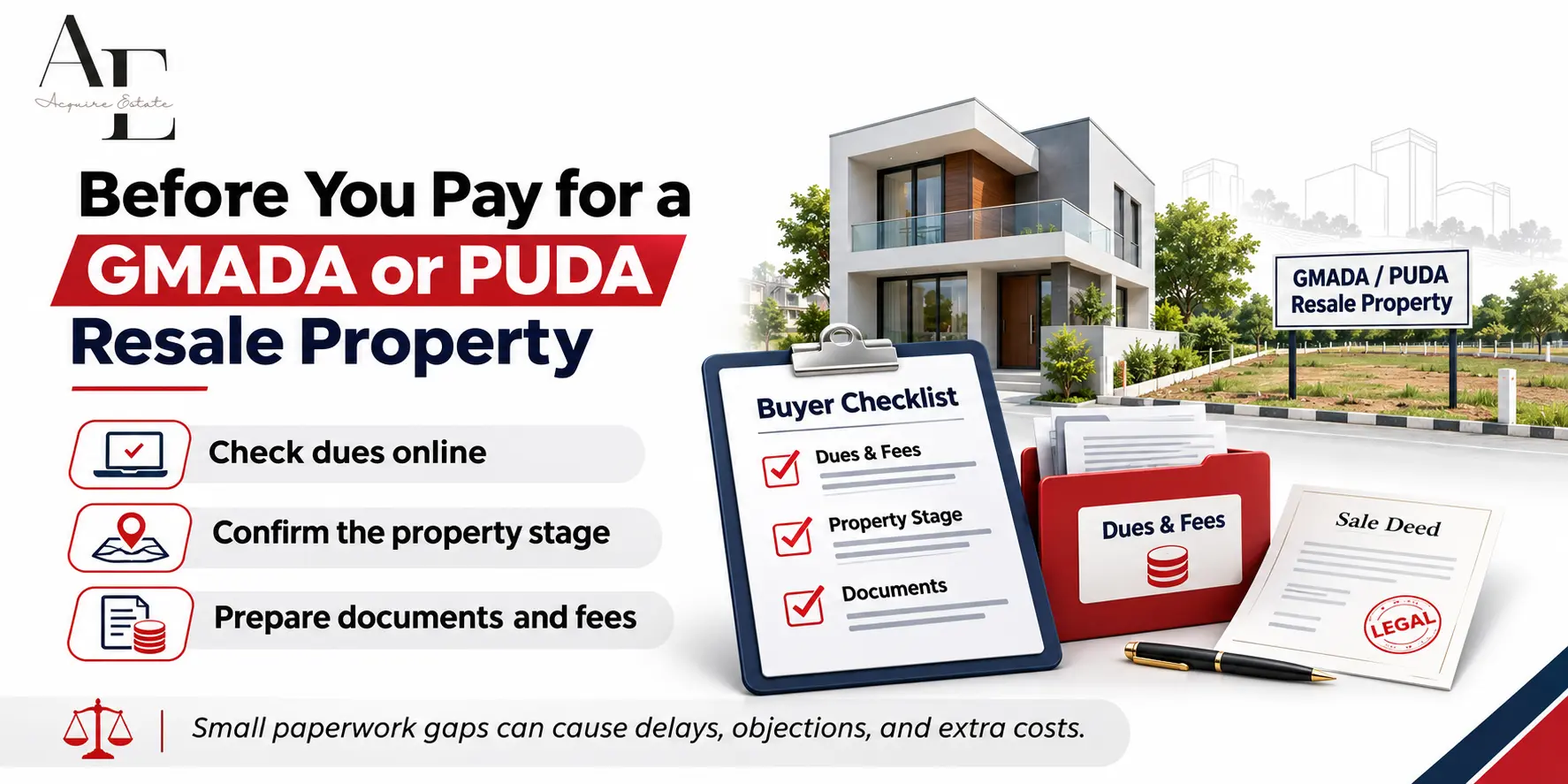
Ask the seller for the original allotment letter. - Check if the property has an LOI, an allotment letter or a conveyance deed. Match the seller's name, plot number and sector with the letter.
GMADA lets you check a property's account on its website under "Know Your Property Details." It is free. Pay attention to unpaid instalments, extension fees and other charges. GMADA will not clear a transfer if dues are pending, so the seller must clear them first.
Use only the current form from the official GMADA website. Old forms and old fee lists float around online and they can be wrong.
Both seller and buyer must prepare their documents. GMADA asks for self-attestedcopies. The list is given in the next section.
Submit the form with all papers and the fee. Payment is made by dem and draftin favour of the Estate Officer or the authority, as the form states. It is payable at S.A.S. Nagar or Chandigarh. Always keep a stamped receipt or acknowledgement.
If GMADA finds a missing paper or a pending amount, it will write back. Reply quickly. Delays here are the most common reason a file takes months instead of weeks.
When the permission is issued, keep the originalsafe. You will need it again for the last step. GMADA's citizen charter lists about 10 days for sale permission, while the application form mentions 21 working days. These are service targets, not promises. Plan for up to a month and more if objections arise.
With the NOC in hand, sign the sale deed and register it at the Sub-Registrar office. Pay stamp duty and registration charges here. These depend on the government's collector rate, so check the current rate before you budget.
Submit a new application to GMADA for change of ownership. Attach a certified copyof the registered deed from the Sub-Registrar and the originalNOC. GMADA lists about 5 working days for this service.
After GMADA updates the name, check the property ledger online. Then store all receipts, letters and certified copies together in one folder.
GMADA's permission form lists the papers below. Keep one more thing in mind: every document must be self-attestedand GMADA expects them pasted neatly on the sheets given in its booklet. Files have come back for small mistakes like this.
Core documents
Application form with property number and sector
Photo ID proof of both sAeller and buyer
Passport-size photographs
Original allotment letter or LOI
Proof of payments made to GMADA
Affidavits (on stamp paper)
Seller's affidavit:States that the seller is the true owner, the property has no mortgage or lien, no case is pending and there is no building violation. GMADA's form asks for a non-judicial stamp paper of Rs 25.
Buyer's liability affidavit:States that the buyer agrees to pay any future dues to GMADA, follow the building bye-laws and the allotment letter terms and handle any claim from other heirs. This is also on Rs 25 stamp paper.
Papers people often forget.
Details of the buyer's legal heirswith attested photographs
Loan or mortgage clearanceif the seller ever borrowed against the property. Get the bank's release letter first.
Occupation certificate or sewerage connection sanction, if the house is built and the certificate was obtained
Death certificate, legal-heir papers or will, if the seller inherited the property
Specimen signaturesof the buyer
Dem and draftfor the fee, with a spare photocopy
A small tip: (transfer property) make two sets of every paper. Keep one at home.
Now the money part. GMADA does not charge one flat "transfer fee" for everyone. The cost depends on your case. Here is how it works, based on GMADA's published permission form.
This is charged in all cases.
Residential plots and houses: Rs 2,500
Commercial and other sites: Rs 5,000
This applies only if permission is sought before the conveyance deed is issued.
Residential and commercial sites: 2.5%of the allotment or auction price
Houses: 5%of the allotment price
Example:If a plot was allotted at Rs 40 lakh, a 2.5% transfer fee would be Rs 1 lakh. The fee is based on the original allotment price, not today's market price.
Transfers within the family (father, mother, son, daughter, husband, wife, brother, and sister) are treated separately under GMADA's rules.
This applies when the building's completion or occupation certificate has not been obtained. The rate rises with the age of the allotment. It starts at 2% from the 4th year and goes up to 4% for the 13th to 15th years. It is charged half-yearly on the allotment price. Some state government departments and PSUs are exempt.
Important:GMADA says fees may be revised at the start of each financial year (1 April). Always confirm the latest figures on the GMADA website or at the Estate Office before you set your budget. Ask the seller to clear any extension or transfer fee in writing or agree in the deal who will pay it.
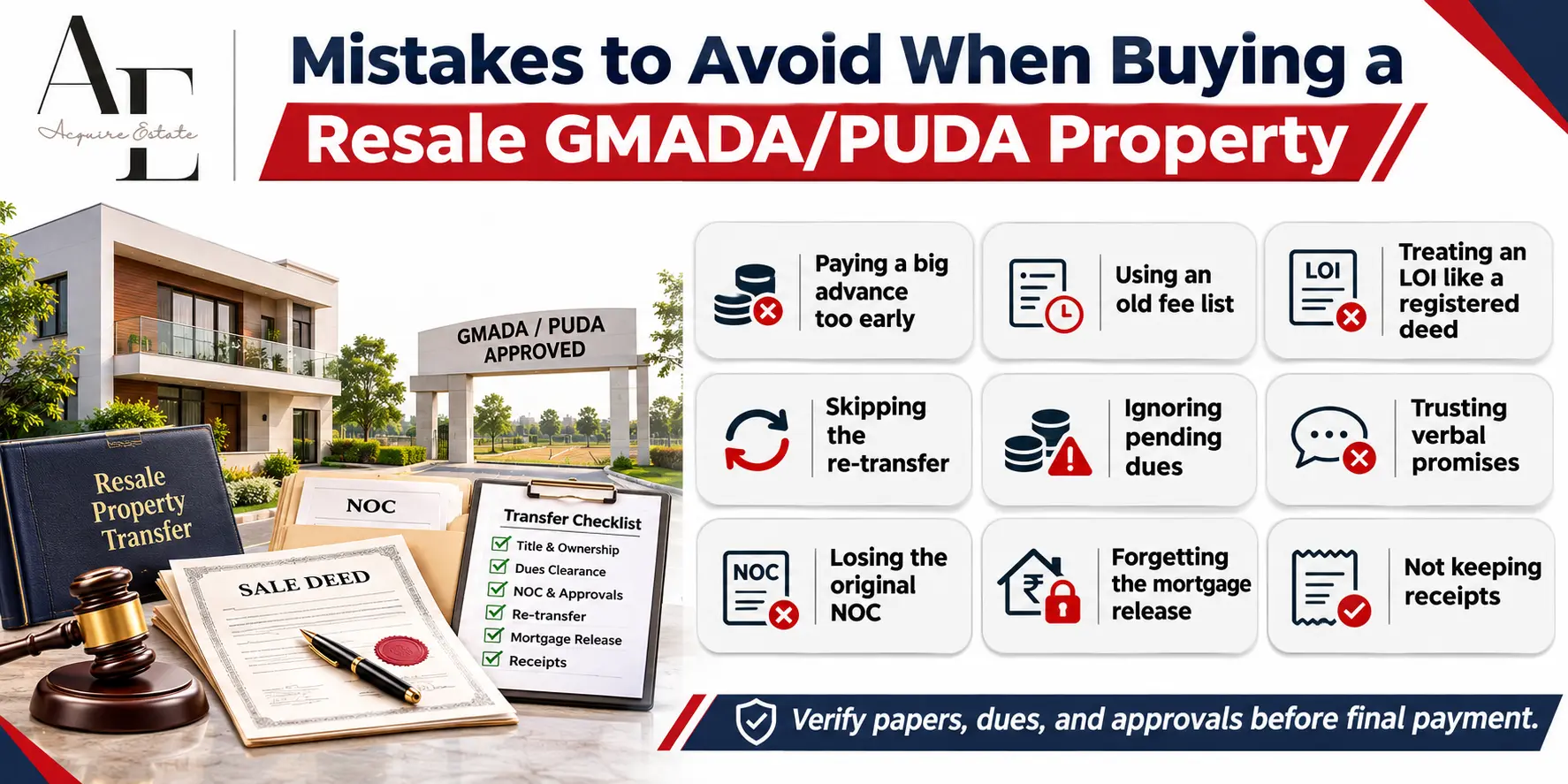
Tick each point before you pay the final amount:
Seller's name matches the allotment papers and ID
Plot number, sector and scheme are confirmed
You have seen the original allotment letter or conveyance deed
GMADA dues are checked online, and receipts match
You know whether the transfer fee and extension fee apply
No loan, mortgage or court case on the property
The seller's and buyer's affidavits are ready on stamp paper
NOC (permission to transfer) is issued, and you hold the original
Physical possession is verified on site
The sale deed is registered at the Sub-Registrar
Re-transfer is applied for, and the record update is tracked online
Punjab RERA status is checked where the project is under RERA
A small paperwork gap can cost you weeks or lakhs of rupees. Our property experts help buyers in Mohali and the Tricity check dues, prepare documents and follow up on the NOC and re-transfer, from the first call to the final record update.
Get help today:Share your property details, and we will guide you on the next step. (Link this line to your contact form.)
Buying a resale GMADA/PUDA property is safe when you follow the right order: check dues, get the NOC, register the deed and then complete the re-transfer. Know your costs in advance, including the processing fee, the transfer fee, the extension fee and stamp duty. Keep every paper self-attested and every receipt safe. And always confirm the latest rules with GMADA or a qualified property lawyer before you pay. A few careful checks today can save you from bigger problems tomorrow.
Disclaimer: This article is for general information. Rules, fees and timelines can change. Please verify the current details with GMADA or a legal expert before acting.
Builder delayed your flat? Learn Section 18 of RERA, how to file a complaint in Punjab, Haryana and Delhi, and when to c...

Haryana has retired its 2013 property tax rules and adopted a fresh, formula-based system built around Capital Value, Co...

Local bodies in Punjab shape everything from your water bill to your building plan approval. This guide breaks down the...