
Hi there! How can we help you today?

Buying a Home
NRI Property Buying In India With Complete FEMA & Tax Guide
NRI property buying in India comes with strict FEMA rules, a freshly updated 2026 tax law, revised TDS sections, home lo...
Discover Your Dream Home with Our Latest Listings and Personalized Services!
Explore Our Exciting New Property Listings Now Available in Prime Locations!
Take Advantage of Limited-Time Offers on Luxury Homes with Stunning Features!
Join Us for Exclusive Open House Events This Weekend and Find Your Perfect Home!
Home construction in India tells the story of a family's dreams, savings and years of hard work. This guide walks through mud…Home construction in India tells the story of a family's dreams, savings and years of hard work. This guide walks through mud houses, wooden homes, brick structures and modern Mivan technology, comparing real strength, cost and quality so you choose a home construction style that actually lasts.






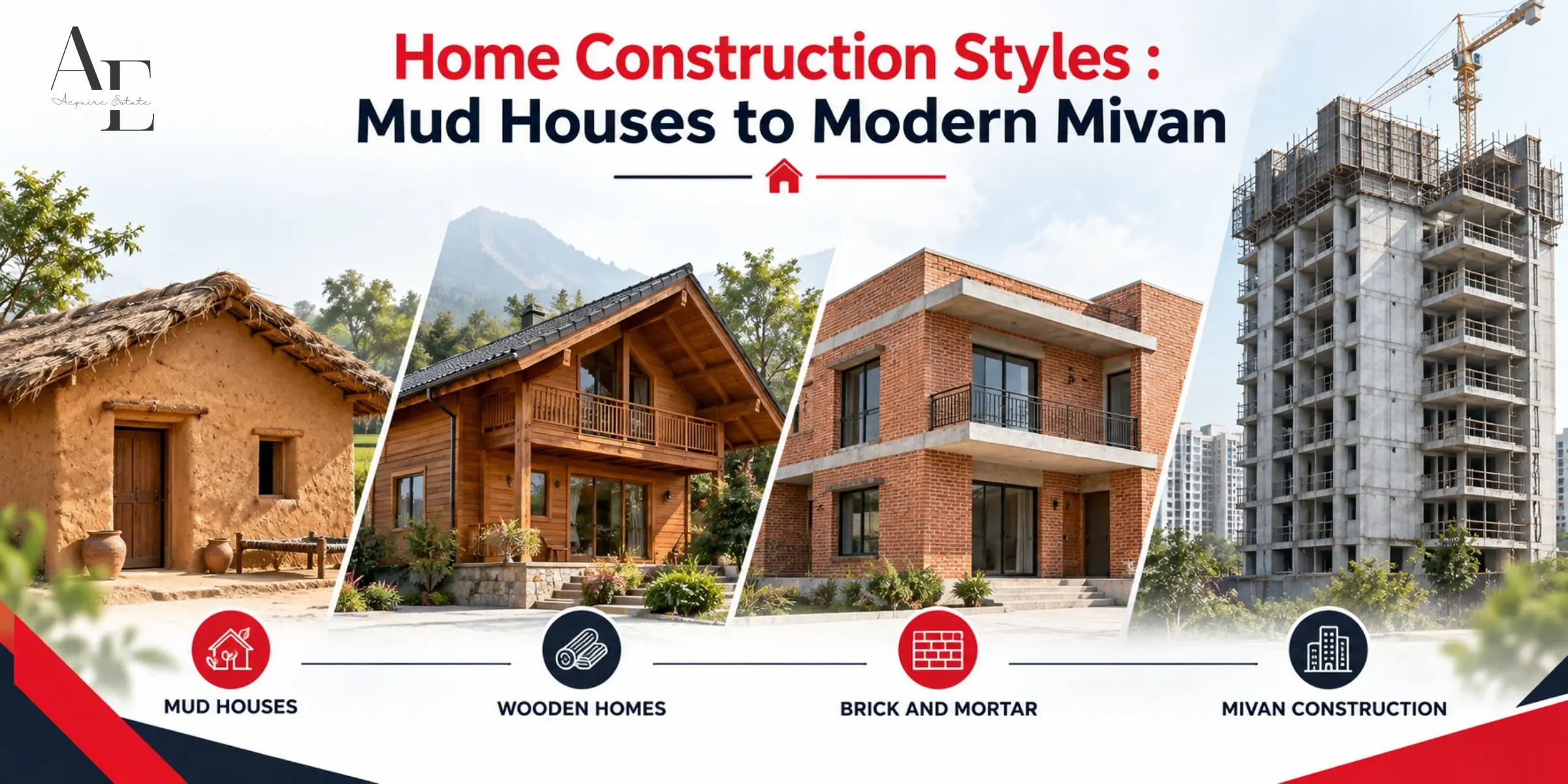
Every home construction story starts the same way. A plot of land, a pile of savings and a family dreaming of four solid walls that will outlast them. What has changed is everything else.
Constructing housing in India has moved from sun-baked mud or you can say bricks and hand-cut timber to aluminium formwork and factory-precise concrete and it happened faster than most of us realised.
If you are planning to build or buy a home in 2026, you are choosing not just a house, but a layout & style that will decide your comfort, your maintenance bills and your resale value for the next 30 years.
This guide walks through mud houses, wooden homes, brick constructing technology and Mivan technology honestly, so you know exactly what you are paying for.
Most people choose a construction style because their neighbour did or because a contractor recommended it. That is how homes end up with cracked plaster in year three or roofs that sweat during every monsoon. The truth is simpler than it sounds. Climate, budget and how long you plan to live in the house should decide the method, not habit.
Punjab and Haryana see blistering summers above 45 degrees Celsius along with short and sharp monsoons. Additionally, Himachal deals with snow load and seismic activities. On the other hand, a house built for Mumbai's humidity will behave differently in Zirakpur's dust and heat.
Furthermore, quality is not a marketing word either. It is measured in things you can check: wall thickness, curing time, steel grade and whether the mason actually followed the design or improvised halfway through.
Once you understand what each construction style really offers which is exactly how it should be for a decision this expensive.
Long before anyone used the word sustainable, rural Punjab and Haryana were already living it. Mud houses, built from clay, straw, cow dung and sometimes lime, kept interiors cool in peak summer and warm through winter nights, all without a single air conditioner.
This natural insulation is real, not just an old story. Thick mud walls have low thermal conductivity, which slows down heat transfer far better than a thin brick wall ever could. That is one reason mud construction is quietly making a comeback in eco-resorts and farmhouse projects across Punjab and Himachal.
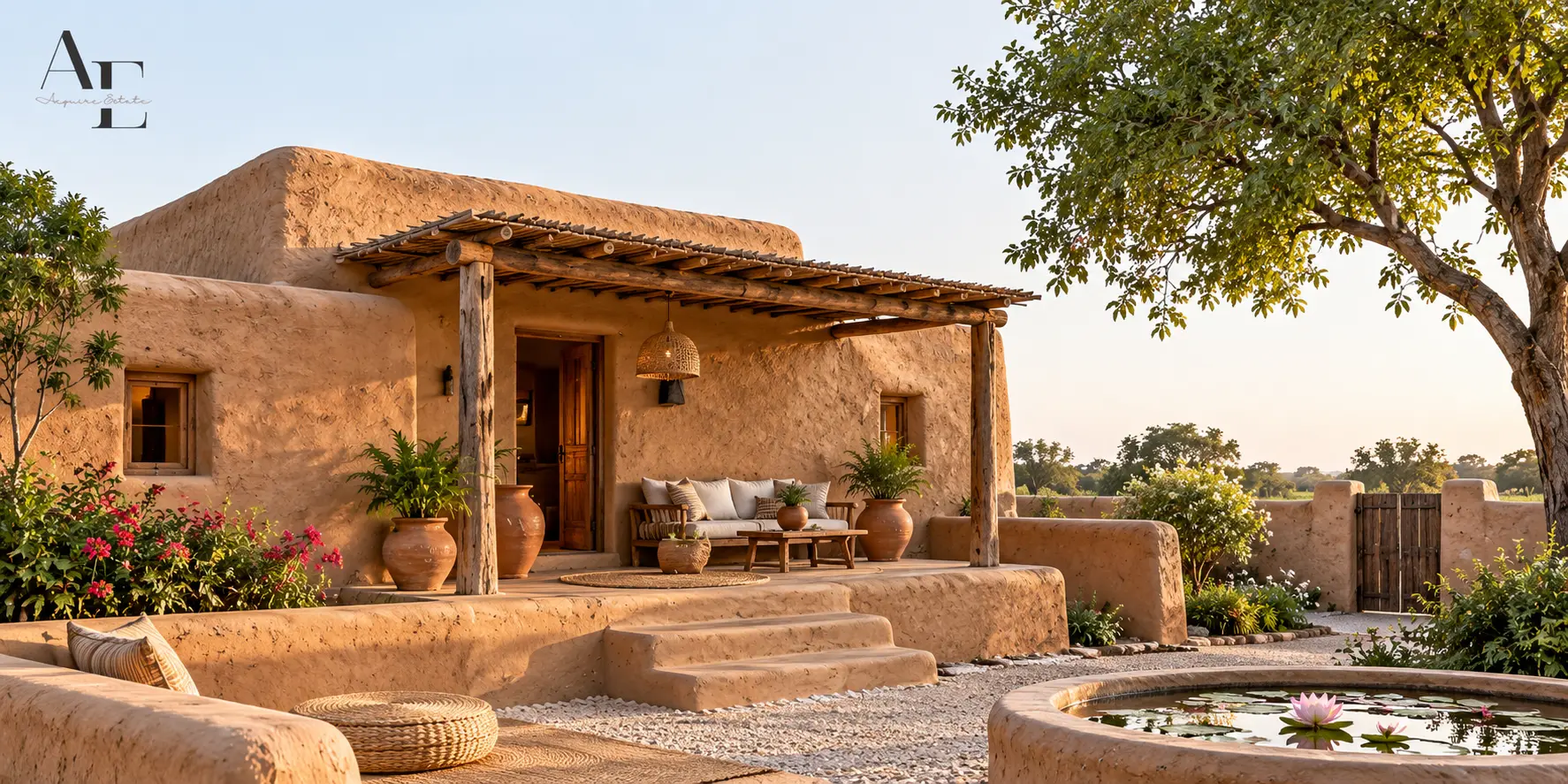
But honesty matters here. Traditional mud houses have real weaknesses. They are vulnerable to heavy, prolonged rain, they need yearly maintenance like re-plastering with mud or lime and they are not built to handle multi-storey loads.
Termites and rodents can also damage untreated mud and thatch. Modern versions try to fix this. Stabilised mud blocks mixed with a small percentage of cement and rammed earth construction using compacted layers, hold up far better against water and pests while keeping the thermal comfort intact.
If you are drawn to this style for a weekend home, a farmhouse or a genuinely sustainable home in a Tricity outskirts like New Chandigarh or Mohali with Mivan Construction. Then stabilised mud or rammed earth is the safer, longer-lasting version of what our grandparents built. It is one of the oldest sustainable building materials we have and in 2026, it is being taken seriously again, not out of nostalgia, but because it genuinely performs well in Indian summers.
Walk through the older parts of Himachal Pradesh and you will see Kath-Kuni homes. These are having alternating layers of timber and stone, built without a single nail, standing for over a century and surviving earthquakes that flattened newer buildings nearby. As Wood construction has genuine engineering value in seismic zones because timber flexes instead of cracking. It also breathes, which helps with humidity control in hill stations and coastal Goa alike.
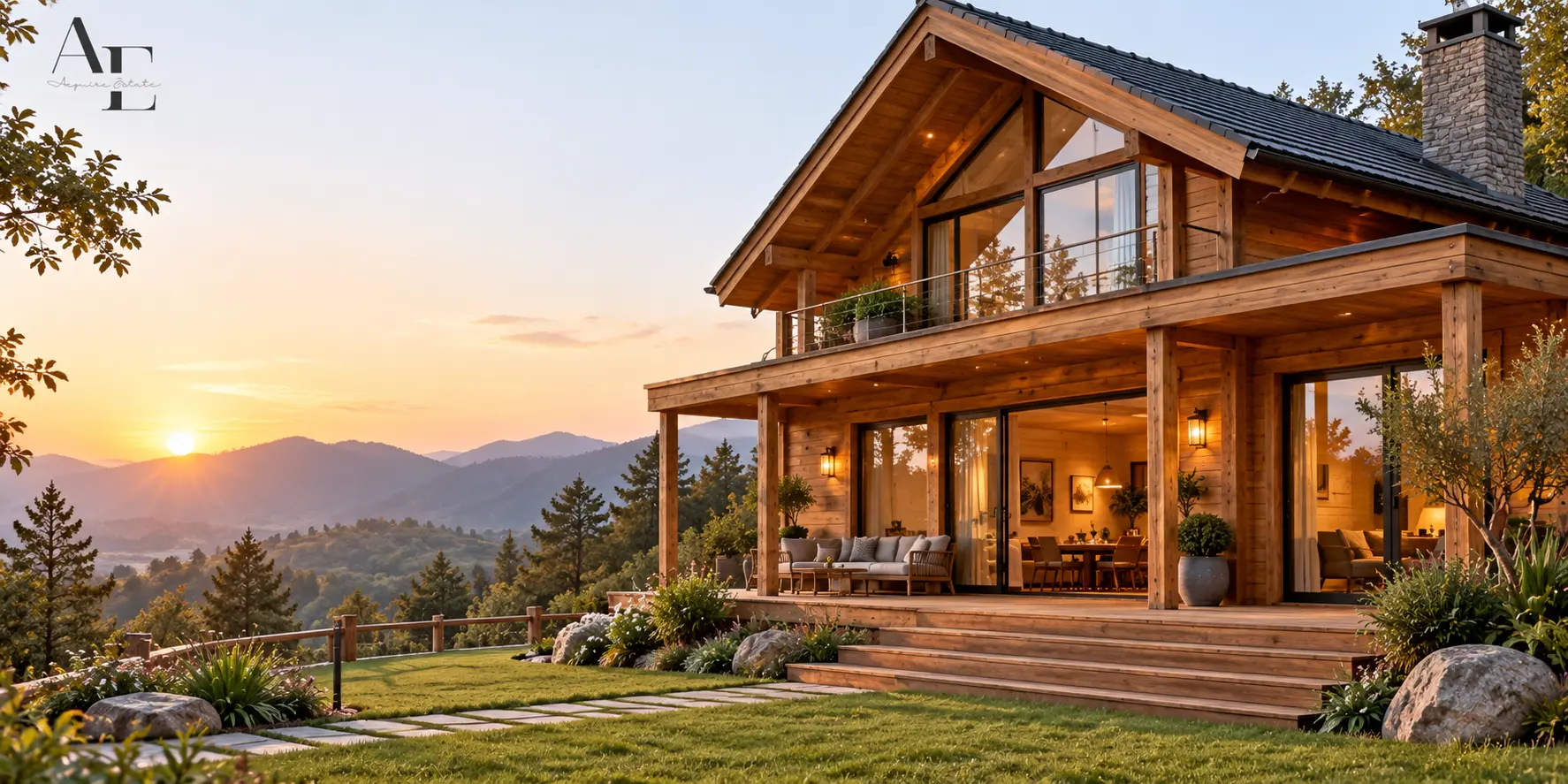
The catch is maintenance and cost. Good structural timber like teak or deodar is expensive and lower grades warp, crack or attract termites within a few years if untreated. Fire resistance is another honest concern; wood needs proper fire-retardant treatment, especially in kitchens. This is why pure wooden homes have mostly become a hill-station or boutique-villa choice rather than a mainstream option in the plains.
Wood still has a useful role in regular house building today when it is mixed with other materials. Exposed wooden ceilings, timber-framed balconies and engineered wood flooring give homes warmth and character without betting the entire structure on it. If your heart is set on a wooden home, insist on kiln-dried, chemically treated timber and ask your contractor for the moisture content certificate. That single document tells you more about durability than any brochure will.
Brick construction is what most of us picture when we hear the word house and for good reason. It is affordable, locally available almost everywhere. Furthermore the fire-resistant and forgiving of small design changes mid-project, something Mivan simply does not allow. RCC framed structures with brick infill have been the default for Indian homes for over 70 years and that track record counts for something.
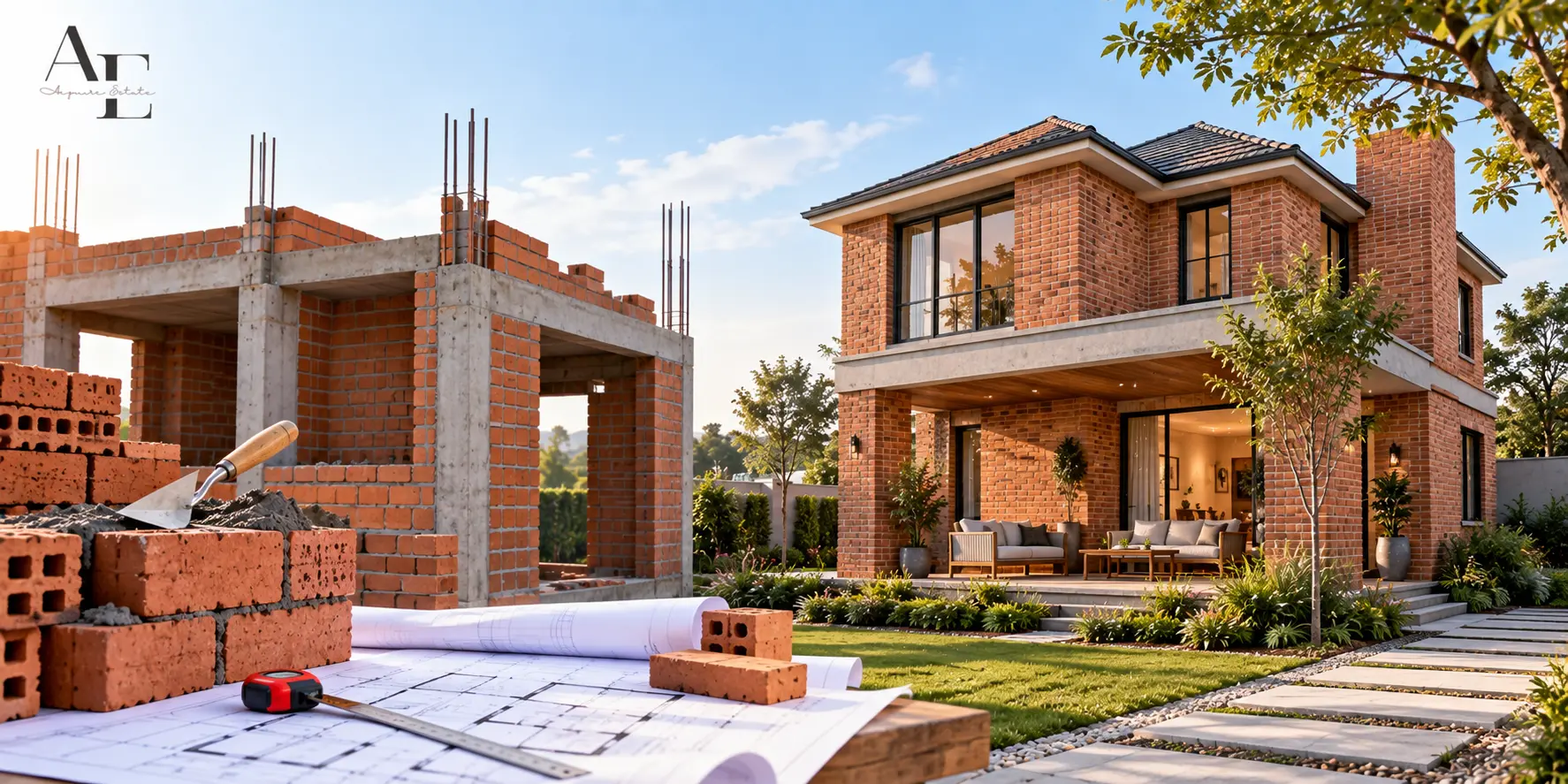
Quality in brick construction comes down to a few checkable things. First-class bricks should have a clean, uniform colour and a sharp metallic sound when struck together, not a dull thud. Water absorption should stay under 20 percent; anything higher and the wall will hold moisture, leading to seepage and salt patches within a couple of monsoons. Mortar ratio matters just as much as the brick itself, a weak 1:8 cement-sand mix will crack long before the brick does.
The bigger shift in 2026 is what is replacing traditional clay bricks. Fly-ash bricks are made from power-plant waste that would otherwise end up in landfills. AAC blocks weigh only about one-third as much as regular clay bricks and insulate much better. Both are now recommended in green building guidelines for good reasons.
They cut both cost and environmental impact, making them some of the more genuinely affordable building materials available to a homeowner who still wants brick-and-mortar reliability. If you are building any Residential and Commercial projects in the Tricity belt, ask your contractor directly whether they are using fly-ash brick or AAC block. Most are, but not all will offer it unless you ask.
Mivan is not a material, it is a method. Aluminium formwork panels are assembled on site to cast walls, slabs, beams and staircases in one continuous pour, instead of building them brick by brick. The panels are reusable across hundreds of cycles, which is why large developers doing repetitive tower designs love it. The same formwork gets used floor after floor.
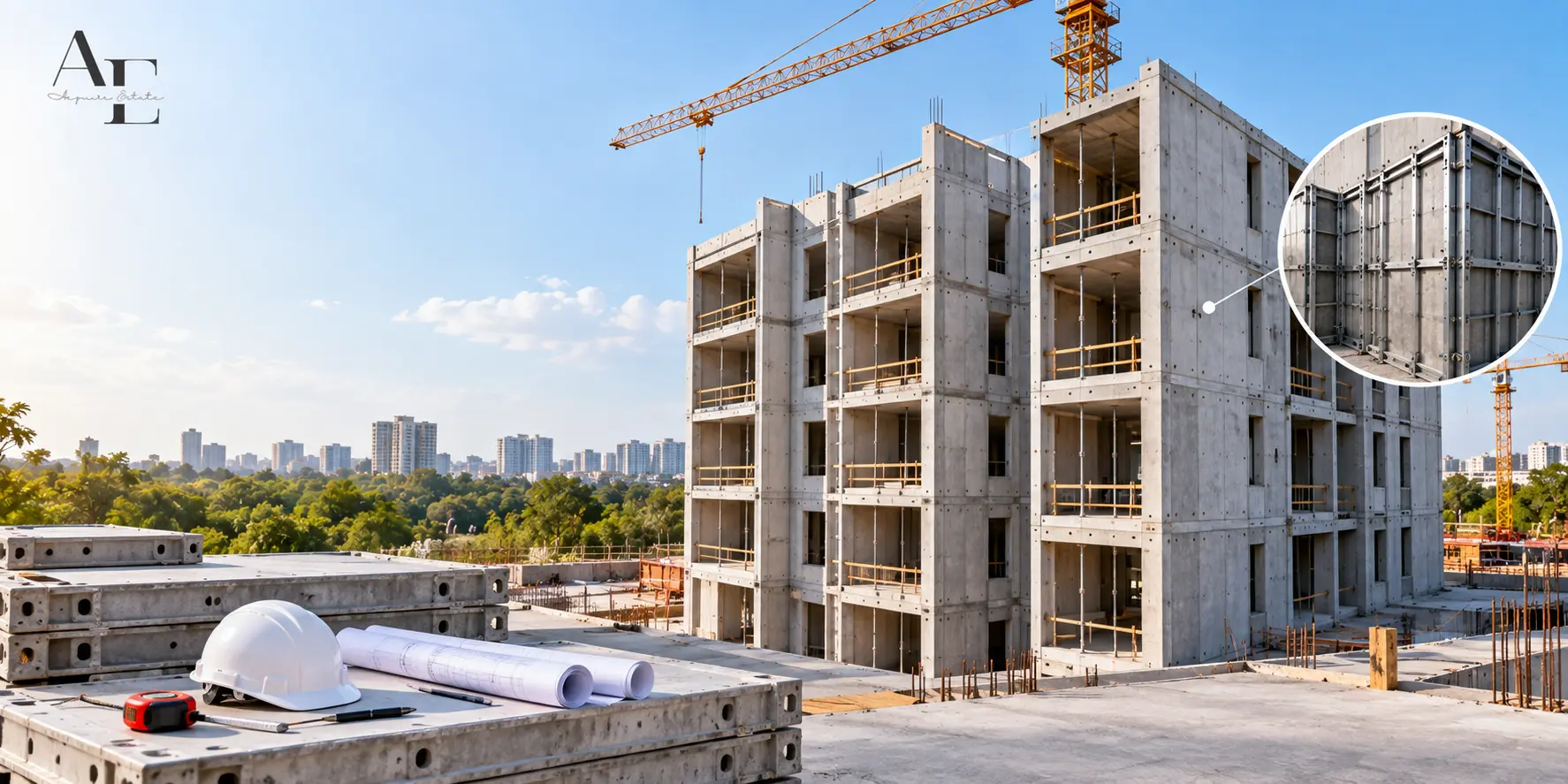
The advantages are real and measurable. Mivan structures are cured as a monolithic unit, meaning there are no weak joints between wall and slab, which noticeably improves seismic performance. Construction speed is also dramatically faster; a floor that takes 25 to 30 days in conventional construction can be cast in 7 to 10 days with Mivan. Less shuttering material also means less timber consumption on site.
None of this is free. Mivan shuttering itself costs roughly Rs. 8,000 to Rs. 9,000 per square metre before tax. The overall home constructioncost typically rises by Rs. 150 to Rs. 300 per square foot compared to conventional RCC, according to industry cost breakdowns published in 2026. On a typical 3 BHK, that premium works out to a few lakh rupees. It is also a poor fit for custom, non-repetitive designs, since the formwork cost only pays off across multiple identical floors.
So is it the future of new home construction? For large housing societies and gated townships with repeated floor plans, yes, almost certainly. For a single custom bungalow with a unique layout, conventional brick and RCC construction is still the more sensible, cost-effective choice. The right answer depends entirely on what you are building, not on which method sounds more modern.
Here is a side-by-side look at how these four construction styles actually compare once you strip away the marketing.
Construction Style | Best Suited For | Typical Lifespan | Cost Positioning | Sustainability Angle |
Mud / Rammed Earth | Farmhouses, weekend homes, low-rise rural builds | 15-25 yrs (longer if stabilised) | Lowest | Excellent, natural, biodegradable |
Wood / Timber-framed | Seismic hill zones, boutique villas | 50-100+ yrs if treated well | High material cost | Good, if sourced responsibly |
Brick & RCC | Standard urban and semi-urban homes | 50-75 yrs | Moderate | Improves with fly-ash brick/AAC |
Mivan (Aluminium Formwork) | Large townships, repetitive floor plans | 60-80+ yrs, monolithic strength | Moderate to high premium | Less timber use, faster, less waste |
Green Homeused to mean a marketing sticker on a brochure. A green home is built to help the planet. It uses earth-friendly materials like wood, hemp and recycled stuff. It saves energy, keeps air clean inside and costs less to run over time. No more empty marketing claims.
In 2026, it means something you can actually measure, thanks to rating systems like IGBC and GRIHA. GRIHA, developed by TERI and formally adopted by India's Ministry of New and Renewable Energy, is the country's official national green rating system, built specifically for Indian climate zones.
Indian Green Building Council run under the Confederation of Indian Industry, has now registered over 20,000 projects covering more than 16 billion square feet , giving India the second-largest green building footprint in the world.
You do not need a certified tower to benefit from this shift. Individual homeowners across the Tricity region are quietly adopting the same sustainable building materialsthat certified projects use, just without the paperwork.
Here is what is actually going into sustainable homesright now:
None of this needs a big budget upfront. Most add 3 to 8 percent to construction cost and pay that back through lower electricity and water bills within a few years, which is a far better trade than most people realise when they first hear the word sustainable construction.
Nobody budgets properly for waterproofing and it shows. Roof leaks and seepage are the single most common complaint in Indian homes within the first five monsoons and almost all of it traces back to two decisions made at construction stage: the waterproof material used and the roofing choice.
For terraces and basements, crystalline waterproofing compounds that chemically bond with concrete now outperform the older bitumen coating, which cracks and peels within a few years under UV exposure. APP-modified membranes are another reliable waterproof material for flat roofs, especially in high-rainfall pockets. Whatever you choose, insist on a slope of at least 1 in 100 towards the drain; water sitting flat on any surface will eventually find its way in.
Roofing materials matter just as much as the waterproofing layer beneath them. Galvalume and PUF-insulated metal sheets are now among the more durable roofing materials for sloped roofs. It resists rust far longer than plain GI sheets while also cutting indoor heat gain, a real advantage during Tricity summers. For flat RCC roofs, a china-mosaic or tile finish over the waterproofing layer protects the membrane from direct sun damage, extending its life well beyond the standard 8 to 10 year warranty most contractors quote.
Spend here first, not last. A construction budget that skips waterproofing to save money always pays it back, with interest, a few monsoons later.
Prices below are indicative, all-India averages compiled from 2026 industry cost trackers. They will vary by city, labour rates and material choice, so always confirm with a local, itemised quote before finalising your budget.
Construction Grade | Approx. Cost per Sq Ft (2026) | What It Typically Includes |
Economy / Budget | Rs. 1,200 - Rs. 1,800 | Basic brick or RCC structure, standard fittings, minimal finishing |
Standard | Rs. 1,800 - Rs. 2,500 | Better tiles, branded sanitaryware, decent electrical fittings |
Premium | Rs. 2,500 - Rs. 3,500 | Designer finishes, branded materials, upgraded MEP work |
Metro Premium (Mumbai / Delhi) | Rs. 2,200 - Rs. 4,500 | Higher land and labour cost push this bracket further |
Mivan Premium (over conventional) | + Rs. 150 - Rs. 300 | Aluminium formwork, faster timeline, monolithic strength |
Mason wages have also risen 15 to 20 percent compared to 2024, largely due to inflation and better labour mobility, so labour now forms a bigger share of your total budget than it did even two years ago.
Affordable does not have to mean weak. Some of the most cost-effective materials on the market today outperform their pricier, traditional counterparts:
The pattern here is simple. The most affordable building materialsin 2026 are usually the ones made locally, from local waste or local raw material, not the ones flown in from another state.
Search almost any home constructionguide online and you will find the same four sections repeated: material types, cost tables, pros and cons, done. What most of them skip is the part that actually affects your wallet five years later: how your chosen construction style interacts with government schemes, resale value and home loans.
Under schemes like PMAY, the Pradhan Mantri Awas Yojana, certain income categories get interest subsidies on home loans, but the subsidy calculation depends partly on the built-up area. Furthermore the construction type is declared, which most buyers only discover after their loan is already sanctioned. Similarly, banks are increasingly asking for structural certification, especially for Mivan and RCC-framed homes above four floors, before releasing the final loan tranche.
Resale value tells its own story too. A brick or Mivan home with clear records and quality checks keeps its resale value better. This holds especially true for 3 BHK flats in Tricity's high-demand societies, where buyers actively check for RERA approval and structural certificates before purchase.
Homes without basic papers like RERA approval, structural certificates, or waterproofing warranties lose value faster. In a growing market like Tricity, where inventory increases every quarter, that paperwork difference can mean lakhs of rupees at resale time.
Nobody talks about this because it is not as visually interesting as a Mivan versus brick comparison. But it is often the difference between a home that appreciates and one that just sits there, depreciating quietly.
Constructionis never just about walls and roofs; it is about the family that will live, laugh and grow old inside them. Whether you choose the earthy warmth of a mud house, the character of wood, the dependable strength of brick or the speed and precision of Mivan. The right style of constructing houses is the one that matches your budget, your climate and your peace of mind.
Real construction quality shows up years later, in the roof that never leaks and the walls that never crack, not in the glossy brochure. As constructing technology keeps evolving through 2026 and beyond, one truth stays constant: a well-built home is the safest investment a family can make.
Mivan offers faster construction and a strong monolithic structure, ideal for large repetitive projects. Traditional brick and RCC construction remains more flexible and cost-effective for custom, one-off homes. Neither is universally better; the right choice depends on your project type.
Yes, especially stabilised mud block or rammed earth versions, which handle rain and pests far better than untreated traditional mud walls. They remain a genuinely sustainable option for low-rise homes in suitable climates.
Costs typically range from Rs. 1,200 to Rs. 3,500 per square foot depending on quality grade, with metro cities like Mumbai and Delhi commanding Rs. 2,200 to Rs. 4,500 per square foot.
Crystalline waterproofing compounds and APP-modified membranes currently outperform older bitumen coatings, especially when protected with a tile or china-mosaic finish on top.
They usually add only 3 to 8 percent to upfront construction cost and typically recover that through lower electricity and water bills within a few years.
Certification programmes like IGBC NEST are designed for individual homes under 150 square metres and start at a modest fee, though most homeowners simply adopt the same green practices without going through formal certification.
NRI property buying in India comes with strict FEMA rules, a freshly updated 2026 tax law, revised TDS sections, home lo...
Thinking of buying into a gated society in Mohali, Zirakpur, or New Chandigarh? This guide breaks down how maintenance c...
A practical, RERA-verified 2026 guide to 3 BHK flats in Mohali covering top gated society projects, price per sq ft, car...
Hi there! How can we help you today?