Delhi–Amritsar–Katra Expressway: Route, Completion Date & Impact on Punjab Real Estate
The Delhi Amritsar Katra Expressway will drastically cut travel time across North India and could accelerate property demand, logistics hubs and residential…The Delhi Amritsar Katra Expressway will drastically cut travel time across North India and could accelerate property demand, logistics hubs and residential growth across Punjab’s major urban corridors.
Infrastructure has always been one of the strongest catalysts for real estate growth. In North India, the Delhi Amritsar KatraExpresswayis emerging as one of the most transformative highway projects, expected to reshape connectivity across Delhi, Punjab and Jammu & Kashmir.
For property investors and developers in Punjab - especially in the Tricity region (Mohali, Chandigarh, Panchkula) -the expressway represents more than a transportation project. It signals potential growth in land values, logistics infrastructure and residential demand along key corridors.
With a planned length of approximately 670 km, the expressway is designed to cut the Delhi–Katra travel time from about 12–14 hours to nearly 6 hours, dramatically improving accessibility across the region.
The expressway is designed as a four-to-six lane controlled-access highway intended to improve freight movement, tourism connectivity and industrial development.
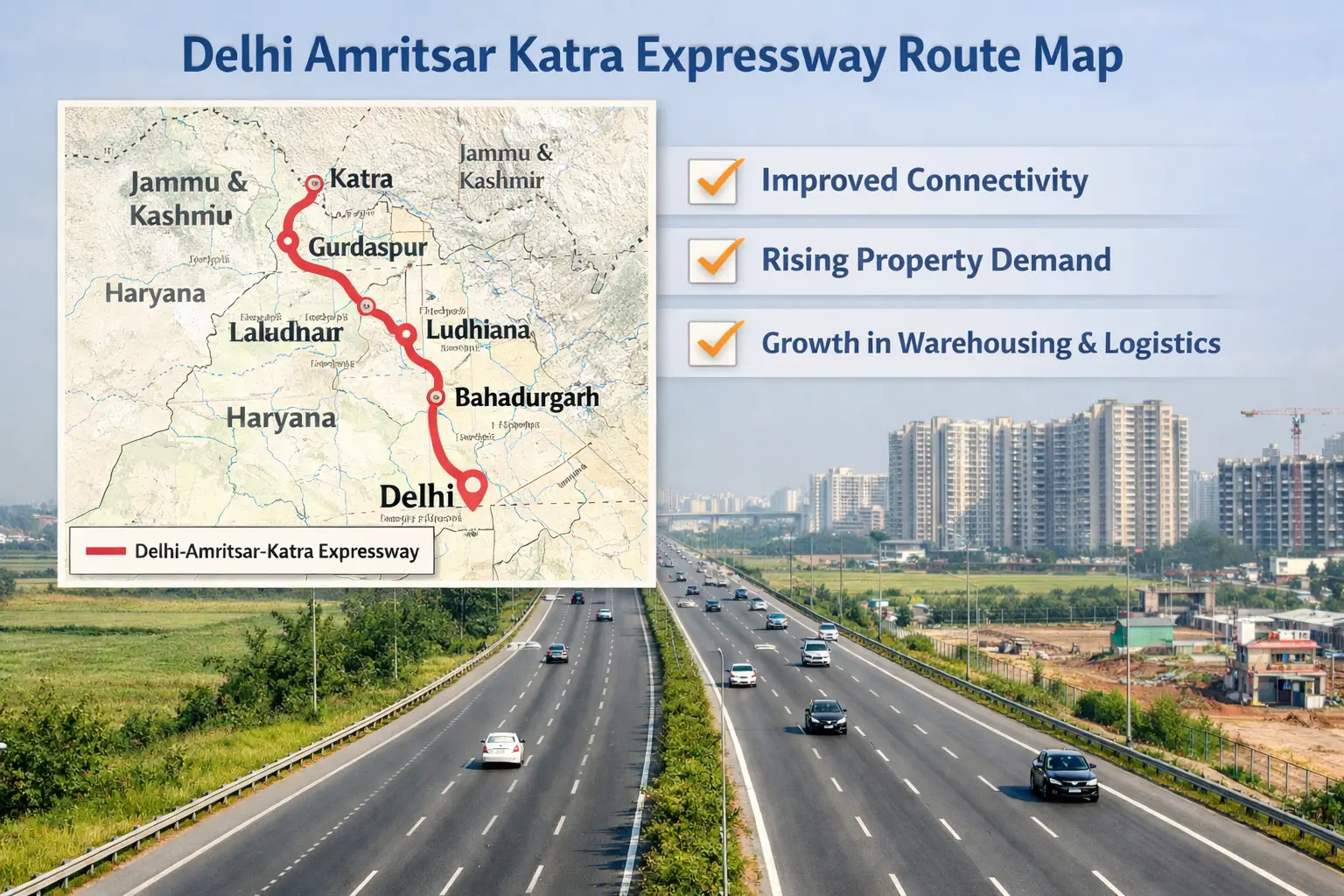
Route Map and Major Cities Connected
The expressway will pass through several important districts across North India.
Key Route Highlights
The planned route connects:
Delhi
Bahadurgarh (Haryana)
Ludhiana
Jalandhar
Amritsar
Gurdaspur
Katra
This alignment improves connectivity between Punjab’s industrial belt and Delhi’s consumption markets, making it easier for goods and people to move across regions.
Strategic Locations in Punjab
Ludhiana Industrial Belt
Ludhiana is already one of North India’s largest manufacturing hubs. Improved highway connectivity could strengthen its role as a logistics and industrial center.
Amritsar Tourism Corridor
Amritsar attracts millions of tourists annually due to the Golden Temple and Wagah Border. Faster access from Delhi could increase tourism-related property demand.
Gurdaspur and Border Districts
These regions may benefit from improved connectivity and infrastructure investment that historically remained limited.
Completion Timeline and Current Status
Infrastructure projects of this scale are usually built in phases.
Construction Phases
The project has been divided into multiple construction packages, allowing different sections to be developed simultaneously.
Current Status
According to NHAI updates, several packages of the expressway are under construction, while land acquisition and engineering works continue across multiple segments.
Expected Completion
Most industry observers expect major portions of the corridor to become operational between 2026 and 2028, depending on construction progress and funding approvals.
How Expressways Influence Real Estate Markets
Infrastructure corridors often trigger real estate growth due to three major factors:
Faster accessibility
Industrial and logistics demand
Residential expansion
According to JLL India research, infrastructure-led development often increases land values along major highway corridors by 20–40% within a decade, depending on local economic activity.
Mohali has already become one of Punjab’s fastest-growing real estate destinations due to:
IT parks
international airport connectivity
proximity to Chandigarh
Investor Perspective
Improved intercity connectivity strengthens regional investment confidence, often encouraging developers to launch new residential projects.
Pro Tips for Real Estate Investors
Before investing near infrastructure corridors, consider the following checklist.
Quick Checklist
Verify land zoning and development permissions
Study highway interchanges and exit points
Evaluate industrial growth plans nearby
Check government master plans
Avoid speculative purchases without infrastructure timelines
Featured Snippet Question
What is the Delhi Amritsar Katra Expressway?
The Delhi Amritsar Katra Expressway is a 670-km access-controlled highway connecting Delhi with Amritsar and Katra in Jammu & Kashmir. It aims to reduce travel time to around six hours while improving freight movement, tourism access and regional economic connectivity.
How will the expressway affect Punjab property prices?
Infrastructure projects typically increase land demand near major interchanges and industrial corridors. While appreciation varies by location, improved connectivity can attract logistics hubs, tourism development and residential projects.
Conclusion
The Delhi Amritsar Katra Expressway represents one of the most significant infrastructure developments in North India. Beyond faster travel, the corridor could reshape trade routes, logistics networks and investment patterns across Punjab.
For real estate investors and developers in the Tricity and broader Punjab region, the project offers long-term potential - but careful research and location analysis remain essential before making investment decisions.
If you are tracking Punjab real estate opportunities, monitor infrastructure developments like expressways, airports and industrial corridors - they often shape the next wave of property growth.
Frequently Asked Questions
What is the Delhi Amritsar Katra Expressway length?
The expressway is expected to span approximately 670 kilometers, connecting Delhi with Amritsar and Katra in Jammu & Kashmir while passing through key districts in Haryana and Punjab.
When will the Delhi Katra Expressway be completed?
Different construction packages are progressing simultaneously. Major sections are expected to be completed between 2026 and 2028, depending on construction progress and land acquisition.
Which cities will benefit the most from the expressway?
Key beneficiaries include Ludhiana, Jalandhar, Amritsar, and Gurdaspur, as the highway improves access to Delhi markets and boosts logistics and tourism connectivity.
Will property prices rise near the expressway?
Infrastructure often increases land demand near major interchanges, industrial zones, and urban centers. However, price appreciation depends on local planning regulations and economic activity.
How will the expressway impact tourism in Punjab?
Improved road connectivity could increase tourist traffic to Amritsar and nearby heritage destinations, benefiting hospitality and commercial real estate sectors.
Is the expressway part of a larger national project?
Yes. The corridor is being developed under the Bharatmala Pariyojana, a national highway development initiative focused on improving freight corridors and connectivity.
Why do highways affect real estate markets?
Highways improve accessibility, reduce logistics costs and attract commercial development. These factors increase housing demand and encourage new infrastructure investments.
Is investing near highways safe for real estate investors?
Investment can be beneficial if supported by urban planning and infrastructure. Investors should always verify zoning laws, development plans and project timelines.